
Mechanical systems and devices for lifting and moving loads in industrial, construction, and warehousing contexts combine powered and manual components to control vertical and horizontal movement. These systems include large frame-mounted units, portable lifting devices, flexible load attachments, and ancillary hardware that together allow controlled handling of materials ranging from small packaged goods to heavy structural elements. Design features often address load capacity, reach, travel paths, and operator controls, and configurations may vary by application and site constraints.
Common elements of these systems interact: a lifting mechanism provides motive force, attachments secure the load, and control or guidance systems shape movement. Materials, connection methods, and rated capacities are usually specified to match expected loads and environmental factors such as temperature, corrosive atmospheres, or confined spaces. Manufacturers and standards bodies typically provide rated data and recommended practices that may be consulted when assessing suitability for a particular use.
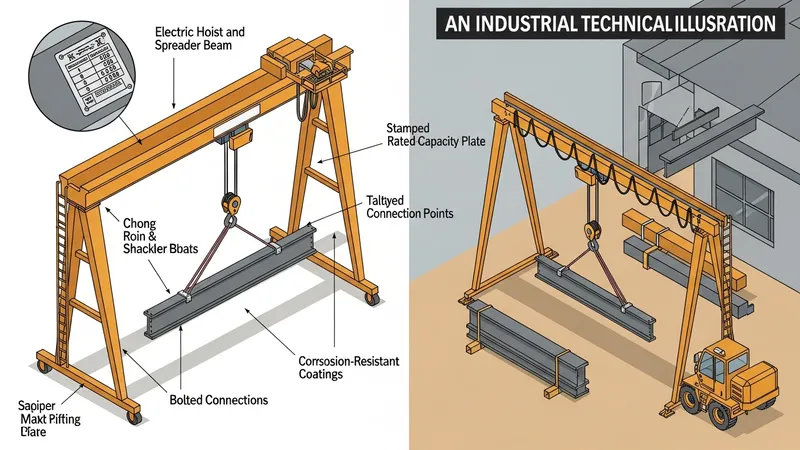
Different machine types may be chosen for reach, mobility, or capacity. For instance, overhead bridge cranes typically provide long-span horizontal coverage within a building and can handle consistent repetitive lifts, while mobile cranes may be selected when site mobility and variable pickup positions are important. Hoists often integrate with crane trolleys or fixed points and may be preferred where compact vertical lift is needed. Attachment selection is influenced by load geometry and attachment points, and may affect lifting angle and effective capacity.
Basic load-handling principles include calculating applied load, evaluating load centers of gravity, and factoring sling angles and hitch configurations. Sling angle can significantly change tension in the leg of a sling; shallower angles may increase leg tension and reduce the safe working load. Load center shifts during pick-up or travel can create moment loads on the lifting structure, so anticipated load behavior and potential dynamic effects such as swinging or impact are typically considered when planning a lift.
Safety standards and industry guidance often set inspection intervals, rated capacities, and marking requirements. Visual checks before use can reveal wear, corrosion, or deformation, and periodic formal inspections may include nondestructive tests or certified load tests for critical components. Recordkeeping for inspection histories and any repairs may assist with traceability and help determine retirement criteria for slings or hoists showing cumulative damage or wear beyond acceptable limits.
Classification systems commonly group lifting equipment by capacity, mobility, or mounting type. Equipment may be rated into nominal capacity bands and service classes that reflect frequency and duty cycles; for example, devices subjected to frequent daily lifts may be assigned a higher service classification than those used intermittently. Matching service class, duty cycle, and environment can affect expected service life and maintenance needs, and manufacturers’ load charts and service recommendations are typically used as reference points.
In summary, understanding lifting systems requires attention to the mechanical components, load interactions, safety standards, and inspection practices that govern safe use. Considerations often include capacity matching, attachment selection, routine checks, and the operational environment. The next sections examine practical components and considerations in more detail.
Large-scale lifting machines and smaller hoisting units present distinct trade-offs in capacity and mobility. Bridge and gantry cranes may offer continuous span coverage over work areas, while mobile hydraulic cranes provide flexibility in placement and reach. Electric hoists commonly integrate into fixed trolleys or overhead systems to lift loads vertically, whereas manual chain hoists may appear where power is unavailable. Slings vary by material: wire rope slings typically offer resistance to abrasion and high temperatures, synthetic slings can be lighter and less damaging to delicate surfaces, and chain slings may be selected for extreme heat or sharp-edged loads.
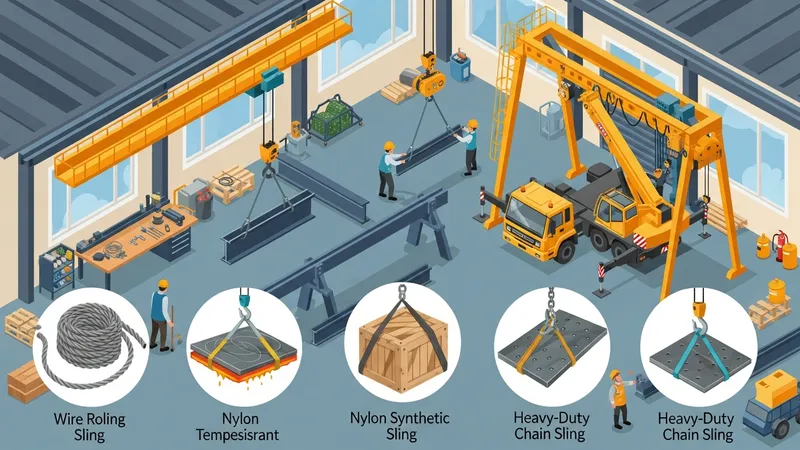
Accessories influence how loads are secured and positioned. Shackles and hooks provide direct connections and can be chosen for rated capacity and fit with sling eyes; spreader beams and lifting frames distribute load points to control the load attitude; and lifting clamps or magnets may be used where standard lifting points are absent. Selection often considers the load’s shape, attachment availability, and the need to avoid damage to the item being lifted.
Design and rating conventions often include safety factors and service classifications. Equipment rated for heavy or continuous duty may be constructed with higher fatigue resistance and more robust components. Load charts, rated capacities, and manufacturer-specified limits are typically consulted during planning. In many sectors, compliance with relevant industry or national standards may be an expectation for equipment selection and use.
Practical considerations can include site constraints such as headroom, floor load limits, and travel paths. For example, low headroom configurations of hoists may be chosen when vertical clearance is limited. Rigging plans often map intended travel paths and set exclusion zones to reduce risk to personnel. These elements may influence whether a fixed crane, portable crane, or a combination of hoist and spreader beam is most appropriate for a given task.
Fundamental load-handling principles hinge on understanding weight, center of gravity, sling angles, and potential dynamic forces. Calculating the effective load on each sling leg may involve resolving forces based on hitch type and sling angle; as the angle from vertical increases, tensile forces in the sling legs typically increase. Anticipated dynamic factors such as acceleration, deceleration, or impact loads during set-down can raise peak loads above static weight and are often estimated and accounted for in planning.
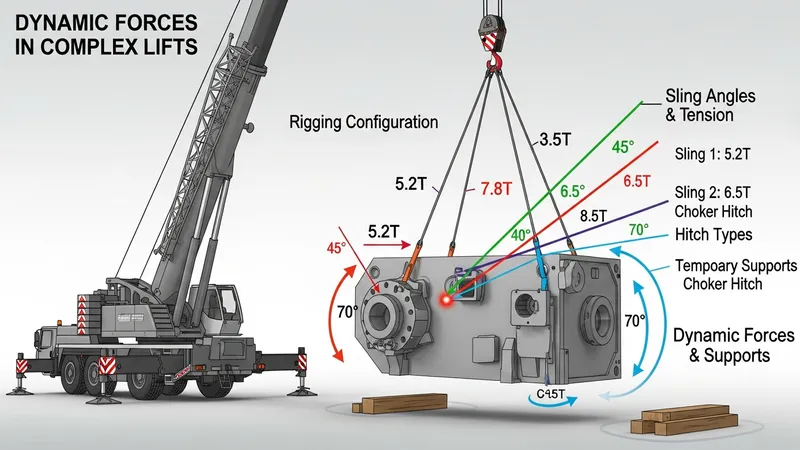
Load center and stability influence selection and placement of lifting points. When a load has an eccentric center of gravity, lift points and spreaders may be arranged to control rotation. The geometry of the load may create pinch or crush zones during lifting and setting, so spatial assessment and temporary supports may be used to maintain stability. Load rotation or sway can be limited with taglines, softeners, or controlled travel paths, bearing in mind that each control introduces interaction forces that may change overall loading.
Performance considerations for hoists and cranes include duty cycle, thermal management, and drive systems. Continuous or high-frequency operations may demand motors and brakes sized for repeated use and cooling arrangements to avoid overheating. Brake selection and regular brake testing are typically part of maintaining predictable stopping behavior. Gear reduction, gearbox lubrication, and electrical controls can also affect smoothness of movement and responsiveness to operator inputs.
Operational environment may impose constraints on materials and design. Corrosive atmospheres, extreme temperatures, dust, or hazardous-area classifications may lead to different material choices, protective coatings, or specialized enclosures for electrical components. Environmental conditions can alter inspection intervals and may necessitate specialized attachments or protective measures for slings and hoists to preserve rated capacity and functional reliability.
Inspection routines commonly combine pre-use visual checks with scheduled detailed inspections. Pre-use checks typically look for obvious defects such as frayed wire rope, melted or cut synthetic sling fibers, bent hooks, or missing safety latches. Detailed periodic inspections may include measurement of elongation, detection of fatigue cracks, verification of load chain wear, and functional testing of brakes and limit switches. Records of inspections and any corrective actions may be retained to track component history and determine retirement criteria.
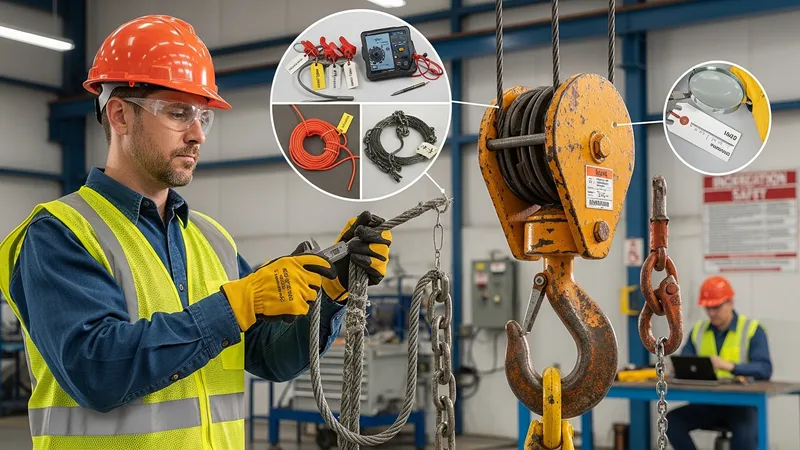
Maintenance practices often follow manufacturer guidance and may include lubrication, torque checks on critical fasteners, and replacement of wear items such as ropes and chains after measured degradation. For hoists and cranes, bearing and gearbox servicing, electrical inspection, and alignment checks are typical. Maintenance intervals can vary with frequency of use and environmental factors; systems used in harsher conditions may require shorter service intervals to maintain reliability.
Regulatory and standards frameworks may set minimum inspection intervals, marking requirements, and operator qualification expectations in many jurisdictions. Industry codes may also define safe working load markings, proof load testing procedures, and requirements for certified repairs. While specific rules vary regionally, relying on recognized standards and adopting manufacturer recommendations can support a consistent safety approach.
Insider considerations for operational safety include documenting lift plans for non-routine or complex lifts, ensuring clear communication protocols among signalers and operators, and using exclusion zones to limit exposure of personnel during a lift. Training in recognition of sling damage, correct hitching methods, and awareness of dynamic effects may reduce incidents. These items are typically framed as risk-reduction measures rather than absolute guarantees of safety.
Classification systems for lifting equipment often separate units by rated capacity, mobility, mounting arrangement, and service class. For example, cranes may be classified as fixed overhead, gantry, tower, or mobile, each category aligning with different site and duty requirements. Hoists can be classified by lifting medium (wire rope, chain, synthetic) and drive type (manual, electric, pneumatic). Sling classification commonly denotes material, configuration, and rated working loads for standard hitch arrangements.
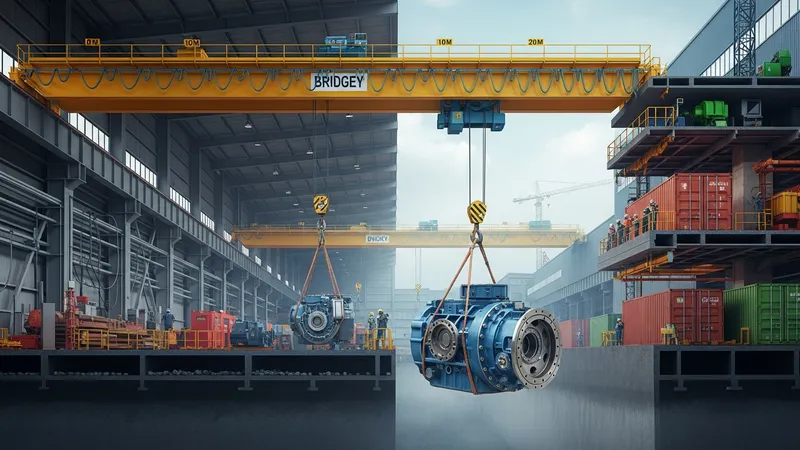
Selection considerations typically include anticipated loads, lift frequency, space constraints, and environmental factors. Load weight and geometry determine capacity and attachment type while duty cycle influences service class and sizing. Space limitations such as low headroom, runway lengths, or ground-bearing capacities may lead to alternate configurations like underhung cranes or portable gantries. Environmental concerns—such as dust, moisture, or heat—can influence material choices for slings and the need for protective coatings or special lubrication.
Common industrial applications vary: manufacturing plants often use overhead cranes and hoists for repetitive assembly and material transfer; construction sites typically employ mobile cranes and tower cranes for placing structural elements; warehousing and logistics environments may use smaller hoists and mobile lifting devices for pallet-handling and order assembly. Each application profile may emphasize different priorities, such as speed and repeatability in manufacturing versus reach and capacity in construction.
Practical considerations for matching equipment to application include verifying rated charts under expected configurations, assessing alignment between duty cycle and service classification, and planning for inspection and maintenance access. Cost of ownership considerations may include lifecycle maintenance, spare parts availability, and anticipated replacement intervals; these are typically evaluated alongside operational needs to inform procurement and asset-management decisions.